Demolition Planned for San Antonio’s Martin Luther King Academy After City’s 39th Annual MLK March
A long-running civic tradition begins at a campus now slated for replacement
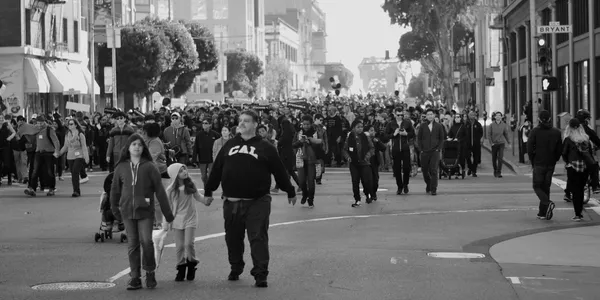
San Antonio’s 39th annual Martin Luther King Jr. March is set to begin Monday, January 19, 2026, at Dr. Martin Luther King Jr. Academy on the city’s East Side, continuing a route that ends at Pittman-Sullivan Park. City officials have described the event as one of San Antonio’s largest annual public gatherings, drawing families, students, community organizations, labor groups and visitors to a march that has become a central MLK Day observance in the region.
This year’s march also marks a turning point for the campus that serves as the starting point. The existing Martin Luther King Academy building is expected to be demolished to make way for a rebuilt, modernized campus funded through San Antonio ISD’s voter-approved 2020 bond program. Construction preparations have already become visible around the site, including perimeter fencing placed ahead of the demolition work.
From a 1950s school building to an East Side landmark
The school building dates to the 1950s and originally operated under the name James Whitcomb Riley Elementary–Junior High School, a name that remained in place until the 1980s. Former students have described the transition period when the campus name shifted to reflect Dr. King’s legacy, and the campus later became known as M.L. King Academy in 2004.
The campus has held a distinctive role beyond education: it is directly tied to the MLK March’s history. The late Rev. Raymond A. Callies, a community activist and educator associated with the campus, is credited with organizing early efforts connected to the city’s MLK March tradition and advocacy tied to the surrounding corridor’s identity.
What the new campus is expected to include
San Antonio ISD’s bond planning materials describe a major reconstruction and renovation scope intended to update core academic, arts and athletic spaces. The planned work includes upgrades and additions across multiple areas of the campus, with construction timed around a multi-year buildout.
- Renovated classrooms and science labs
- Expanded fine arts space, including a performing-arts addition
- Gym and athletics support areas such as locker rooms
- Updated cafeteria and kitchen facilities
- Auditorium improvements
- Main office and main entrance reconfiguration
- Mechanical systems work and window replacement
- Parking, driveways and playground improvements
The district’s project timeline has described a groundbreaking target around late 2025, with construction expected to last about two years once work begins, and a future move-in planned to align with a school break.
Community continuity amid physical change
The campus’ pending demolition has prompted reflections from alumni and community members who view the building as part of the East Side’s shared memory. At the same time, district plans emphasize continuity of service at the academy, which is expected to remain an academy model while continuing to serve early childhood through middle grades, with pre-kindergarten included in the post-project grade configuration.
For many participants, the march’s starting point has represented both a gathering place and a symbol of neighborhood identity—an association likely to continue even as the campus footprint changes.
Monday’s march will proceed with the familiar geography—beginning at the academy and ending at Pittman-Sullivan Park—while the school’s next phase moves from a well-known mid-century building toward a new, bond-funded campus designed for modern instruction and expanded student programming.