Developer pays San Antonio $3.3 million under conservation plan, enabling Guajolote Ranch land clearing
Land clearing proceeds after mitigation payment tied to endangered-species habitat
A developer behind the proposed Guajolote Ranch subdivision in northwest Bexar County has paid the City of San Antonio about $3.3 million in fees under a regional conservation program that allows land clearing in habitat used by the federally protected golden-cheeked warbler. City officials say the payment places the project under a framework designed to offset impacts to sensitive species by funding permanent conservation elsewhere.
The development, led by Lennar, has been planned at a scale of roughly 3,000 homes and includes a wastewater treatment plant proposal that has been a focal point for nearby neighborhoods along the Scenic Loop area. In early February, the San Antonio City Council voted unanimously to deny consent for the creation of a Municipal Utility District (MUD) associated with the project, a mechanism intended to help finance utilities and related infrastructure. Residents who opposed the MUD described the vote as a major milestone, but reported that heavy equipment began clearing land shortly afterward.
How the mitigation structure works
City staff have described the arrangement as part of the Southern Edwards Plateau Habitat Conservation Plan, a regional model that collects fees from participating developers and uses those funds to acquire and preserve habitat in perpetuity for covered species. Under this structure, land clearing can proceed when conditions are met, even where protected habitat exists, because the impacts are addressed through conservation actions away from the development site.
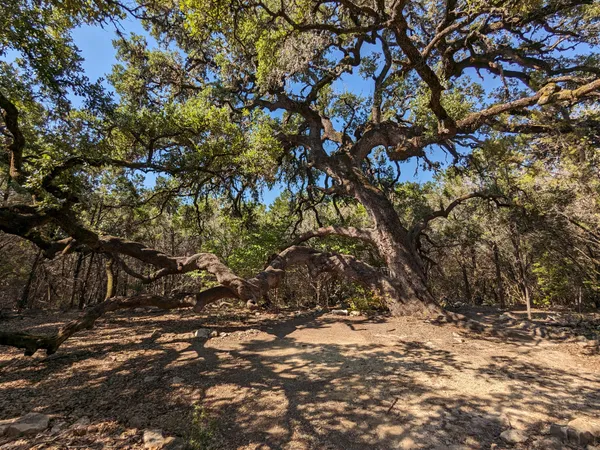
The golden-cheeked warbler, which nests only in Texas, relies on mixed juniper-oak woodlands in the Hill Country. Its breeding cycle and nesting activity are central to how land-clearing restrictions are structured in habitat areas.
Rules, enforcement, and public notice
City officials have said the program includes restrictions and penalties intended to deter violations. Among the enforcement tools described by staff are removal from the program for noncompliance and financial penalties that can exceed the original enrollment cost.
Residents opposed to the development have questioned how the approval was communicated and whether the public had adequate visibility into decisions with immediate on-the-ground impacts. City staff have pointed to standard public-notice processes used for council agendas and committee actions, including advance posting requirements and opportunities for public comment.
What remains unresolved
The MUD request connected to the wastewater component was rejected by City Council, but state-level authority can still determine whether such a district is created.
Permitting and legal challenges involving wastewater planning remain active, keeping key elements of the project contested.
Residents opposing the development have indicated they plan to continue organizing and challenging approvals as land-clearing work proceeds.
The dispute illustrates how regional conservation financing can allow projects to advance while shifting environmental protection to separate preserves—an approach that continues to draw scrutiny when clearing begins near established neighborhoods.
For area residents and city leaders, the next phase is likely to center on how regulatory pathways for wastewater infrastructure and habitat protection are applied as the Guajolote Ranch project moves forward.