Five years later, how San Antonio’s February 2021 winter storm disrupted power, water, and daily life
A week of rare cold and repeated winter precipitation
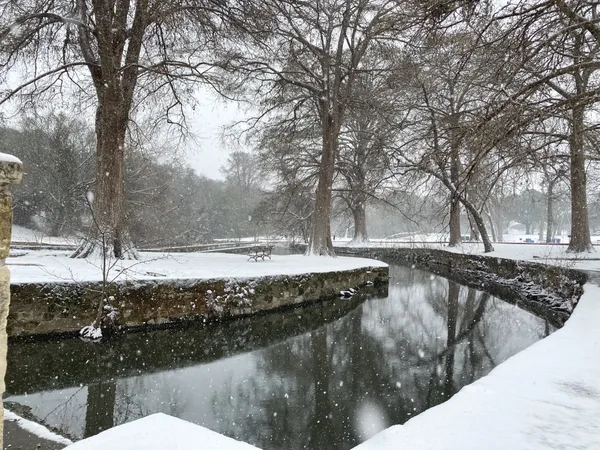
In mid-February 2021, an arctic outbreak pushed prolonged subfreezing temperatures into South Texas, producing multiple rounds of wintry precipitation and creating conditions rarely seen in San Antonio. At San Antonio International Airport, the temperature fell to 9°F on Feb. 15, 2021, tying for the city’s eighth-coldest reading on record. The city also set record low temperatures on five dates during Feb. 14–20, 2021.
Snow fell on four separate calendar days during the 2020–2021 winter season—Jan. 10, Feb. 14, Feb. 15 and Feb. 18—an unprecedented pattern in local records. Total snowfall for the season reached 6.4 inches, making it the city’s third-snowiest winter on record. The cold stretch lasted more than 100 hours below freezing, approaching a historic benchmark set in 1951.
Power outages: rolling blackouts that did not roll for many residents
As demand surged statewide and generation and fuel systems failed across Texas, grid operators ordered controlled outages to reduce load. In San Antonio, the local utility began rotating outages early Feb. 15, 2021, with public messaging that interruptions could be brief. Many households, however, experienced extended loss of electricity and heat, as restoration efforts triggered equipment issues and the system remained under emergency conditions.
By Feb. 16, 2021, reports showed more than 256,000 CPS Energy customers without power at one point, with some neighborhoods facing significantly higher shares of outages than others. The blackout impacts extended beyond comfort: residents relied on alternative heating sources, warming locations, and emergency services during a period when road conditions and temperatures complicated travel and response.
Water system strain: low pressure and a citywide boil water notice
As the freeze persisted, water distribution systems faced escalating problems tied to frozen pipes, leaks and pressure loss. On Feb. 17, 2021, San Antonio issued a citywide boil water notice as officials cited difficulty maintaining pressure above 20 PSI in parts of the system during the prolonged freeze.
The notice advised residents to boil water used for drinking, cooking and ice making. The boil water requirement was lifted on Feb. 23, 2021 after water quality sampling supported rescinding the advisory, and residents were advised to flush household lines and fixtures before consumption.
Measured impacts and lasting operational lessons
Beyond disrupted utilities, the storm carried deadly consequences. State health records later attributed 14 deaths in Bexar County to the winter storm, with hypothermia identified as a contributing factor in each case reviewed by local authorities.
Feb. 14–20, 2021: record lows set on multiple days and repeated snow/ice events.
Feb. 15–16, 2021: widespread, prolonged outages as emergency load shedding continued.
Feb. 17–23, 2021: boil water notice issued, then lifted after system stabilization and testing.
The February 2021 storm became a defining stress test for San Antonio’s energy and water systems, exposing how prolonged cold can cascade across essential services.
In the years since, utilities and agencies across Texas have emphasized weatherization and emergency planning, while the 2021 freeze remains a reference point for preparedness discussions each time extreme cold returns to the forecast.