Raised asphalt truck bed knocks down I-35 overhead signs, closing northbound lanes in downtown San Antonio
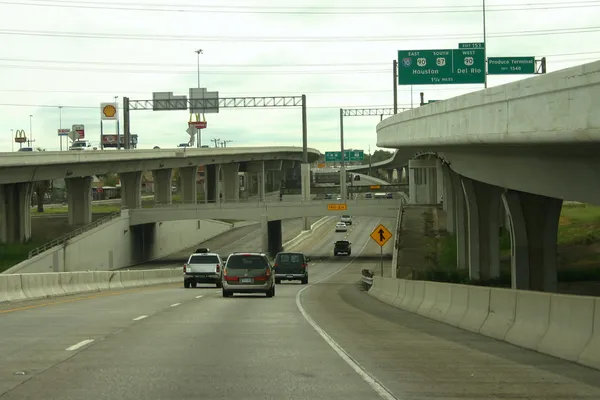
What happened and where
A highway closure unfolded early Tuesday after a truck traveling on Interstate 35 in San Antonio struck overhead roadway signage with its bed raised, sending sign structures down onto the northbound lanes. The crash was reported around 1:10 a.m. on the lower level of I-35 near South Laredo Street in the downtown corridor.
Police indicated the driver reported operating the truck while the rear bed was lifted when it made contact with the overhead sign assembly. Authorities reported no injuries to the driver or to others on the roadway.
Why the closure lasted for hours
Once overhead signs come down, reopening a freeway requires more than clearing debris. Crews must remove fallen components safely, assess remaining supports, and confirm the roadway is safe for traffic. In this case, northbound travel on the affected portion of I-35 was shut down for several hours while crews cleared the scene and the investigation continued.
Traffic impacts were amplified by the fact that this stretch of northbound I-35 has already been operating under significant constraints in February due to scheduled transportation work in the downtown area. The incident occurred in a segment where reduced capacity and rerouting have been an ongoing challenge for commuters and commercial traffic.
Timeline and reopening
About 1:10 a.m.: The crash was reported on the lower level of northbound I-35 near South Laredo Street.
Early morning: Northbound lanes remained closed while the fallen sign structure was addressed.
Just before 9 a.m.: The roadway was reported reopened, restoring northbound movement through the downtown area.
Broader context: overhead sign strikes are a recurring risk
Collisions involving overhead infrastructure can occur when vehicles strike sign bridges, supports, or related structures. In San Antonio, similar incidents in recent years have at times forced extended closures due to the safety requirements associated with damaged signs, poles, and utility lines. When a raised bed, equipment boom, or oversized load contacts overhead structures, the consequences can include immediate hazards to nearby drivers and longer disruptions while repairs are planned and executed.
Authorities reported no injuries, but the collapse of overhead signage required a full northbound shutdown while crews cleared the roadway.
What investigators will likely focus on
The investigation is expected to center on operational and mechanical factors that can lead to a raised-bed strike, including whether the bed was inadvertently left elevated, whether a mechanical or hydraulic malfunction contributed, and whether the vehicle’s route and clearance conditions were appropriate for its configuration at the time of travel.
For commuters, the immediate takeaway was the vulnerability of the downtown I-35 corridor to unplanned disruptions—particularly during periods of already limited capacity—where even a single incident involving infrastructure can trigger regionwide delays.