RiverAid volunteers work through season’s first freeze to reduce stormwater threats to the Edwards Aquifer
Cold-weather cleanup targets pollution pathways into a key drinking-water source
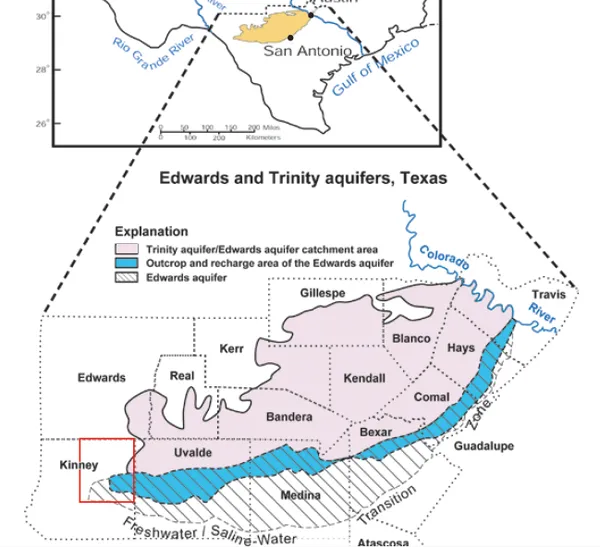
Volunteers with River Aid San Antonio carried out a winter maintenance and cleanup effort during the season’s first freeze, focusing on sites designed to intercept stormwater runoff before it can transport pollutants into the Edwards Aquifer recharge zone. The work reflects a recurring strategy used in San Antonio’s northern watershed areas, where short, intense rain events can mobilize trash, sediment, oils and other roadway contaminants into drainage channels that ultimately cross highly permeable limestone terrain.
The Edwards Aquifer is recharged primarily when precipitation and streamflow seep into exposed, fractured limestone across the recharge zone. Because this karst geology allows water—and contaminants—to move quickly underground, surface pollutants washed into recharge features can pose risks to water quality.
Why freeze conditions matter for stormwater projects
Cold snaps can coincide with high-runoff events in South Texas, when rain falls on hardened ground, vegetation is less active, and seasonal leaf litter and debris accumulate in channels. In that setting, stormwater control features can clog faster, reducing their ability to slow flow, trap sediment and filter pollutants. Maintenance during low temperatures can be operationally difficult, but it is aimed at keeping conveyance and filtration components functional ahead of subsequent storms.
Focus on green infrastructure in the recharge zone
A key emphasis for local volunteer groups has been maintaining “treatment train” stormwater retrofits—systems that use multiple steps to improve water quality. Designs commonly include a forebay that captures sediment and floatable debris, a vegetated swale that slows and filters runoff, and a bioretention area that promotes infiltration while removing additional pollutants. Some projects in the San Antonio area combine these structural elements with pre- and post-construction water-quality monitoring to quantify changes in runoff characteristics.
- Removing accumulated sediment that can reduce storage capacity and increase overflow risk
- Clearing trash and debris that can block flow paths and bypass filtration
- Supporting plant establishment and replacement in vegetated swales and bioretention areas
- Preparing sites to function during high-intensity rainfall events typical of urban watersheds
Stormwater runoff can carry fine sediments and residues associated with roadways and drains, including oils and other chemicals, making debris removal and sediment management a key part of protecting recharge features.
Broader context: water supply pressures and runoff risks
Regional water planning in San Antonio continues to balance aquifer conditions, conservation stages and variable rainfall patterns. Even when rains boost aquifer levels, runoff quality remains a separate challenge: heavy storms can deliver concentrated pollutant loads in short periods, particularly where impervious cover is expanding. Local cleanup and maintenance efforts are intended to reduce the likelihood that pollutants are carried downstream into recharge areas during the next storm cycle.