San Antonio Democrats and activists rally against ICE violence as scrutiny grows over enforcement tactics
Demonstrations tie local concerns to national incidents
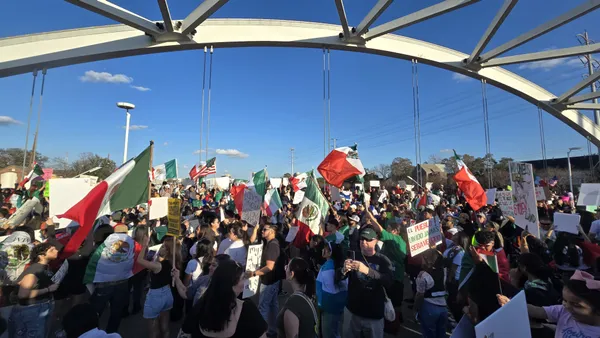
Democratic-aligned groups and immigration advocates in San Antonio have staged a series of rallies this month criticizing federal immigration enforcement tactics and alleging a pattern of escalating violence tied to U.S. Immigration and Customs Enforcement operations. The protests have unfolded against a backdrop of heightened enforcement activity across Texas and national attention on deadly confrontations during federal operations in Minneapolis.
In downtown San Antonio, marchers have gathered at civic sites including City Hall and Main Plaza, chanting against immigration raids and calling for greater accountability. The events have drawn participation from local Democratic organizations as well as advocacy groups, reflecting a broader coalition focused on immigration enforcement, civil liberties, and community safety.
San Antonio City Hall becomes a focal point
Public pressure has also landed inside City Hall. During a January 22 City Council session, residents voiced opposition to ICE activity in San Antonio and questioned the city’s relationship with federal enforcement. City officials discussed the constraints of Texas Senate Bill 4, a 2017 law that requires local cooperation with federal immigration authorities under certain circumstances. Police leadership has stated that local officers do not enforce federal immigration law directly, while acknowledging that assistance can occur under legal requirements and through cooperation frameworks.
Dilley detention center protest escalates after chemical agent released
Tensions rose again on January 28 outside the South Texas Family Residential Center in Dilley, about 70 miles southwest of San Antonio. Demonstrators marched to the facility to call for the release of detainees and increased transparency. Later in the day, a chemical agent was released into a crowd that had dwindled to fewer than 50 people after most marchers dispersed. Videos from the scene showed state troopers in riot gear advancing and deploying crowd-control measures; the origin of the chemical canister remained unclear in early reporting. Two arrests were reported in connection with the confrontation.
The Dilley incident became a flashpoint for competing narratives about crowd behavior, dispersal orders, and the proportionality of police tactics.
Lawmakers’ detention visit highlights family case
Earlier that same day, U.S. Rep. Joaquin Castro and U.S. Rep. Jasmine Crockett visited the Dilley facility and met with a 5-year-old Ecuadorian boy and his father who were detained after being taken into custody in Minneapolis on January 20. A federal judge issued a temporary order earlier in the week barring their removal from the United States while the detention is challenged.
The case has become central to local organizing, with demonstrators framing it as emblematic of family separation and the treatment of children in custody.
Key verified points at the center of San Antonio protests
- Multiple rallies in January targeted ICE enforcement practices and urged accountability.
- City officials discussed legal limits on altering cooperation amid Texas SB 4 requirements.
- A January 28 protest outside the Dilley detention center turned tense after a chemical agent was released and arrests were reported.
- Federal lawmakers conducted an oversight visit tied to the detention of a child and his father transferred to Texas after a Minneapolis operation.
As demonstrations continue, the central questions remain focused on the scope of federal enforcement, the role of state and local agencies, and what oversight mechanisms apply when operations lead to injuries, alleged rights violations, or fatalities elsewhere in the country.