San Antonio East Side residents seek updated MLK Plaza statue to honor the city’s historic march
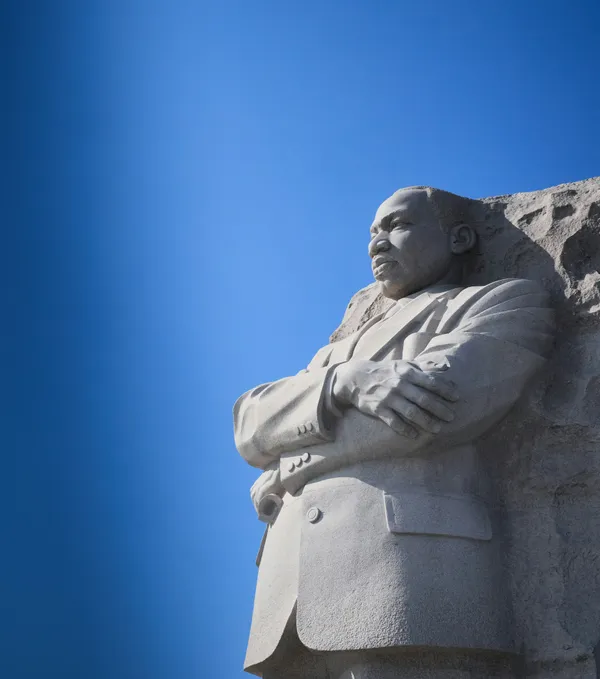
A renewed push centered on a longstanding civic landmark
Residents and community advocates on San Antonio’s East Side are urging city leaders to pursue a new public statue of the Rev. Dr. Martin Luther King Jr. at Martin Luther King Plaza, a small public space at 2202 E. Houston St. that has long served as a symbolic waypoint for the area’s civil-rights commemoration.
The plaza already features a bronze statue of King that was unveiled in 1981 and is administered as part of the city’s parks system. The existing sculpture depicts King in clerical attire holding an open book, set atop a base with an inscription referencing his “I Have a Dream” speech. The artwork is widely recognized locally as part of the visual landscape associated with the annual Martin Luther King Jr. march route through the East Side.
How the march and the plaza became linked in public memory
San Antonio’s MLK march developed over decades into one of the nation’s largest public commemorations of King’s legacy. The event’s history is closely tied to East Side civic organizing that followed King’s assassination in 1968, and later became an official city-supported event in the late 1980s. The march typically traverses historic East Side streets and culminates at Pittman-Sullivan Park with a commemorative program.
Because Martin Luther King Plaza sits along a corridor strongly associated with these commemorations, advocates argue that the city’s public art at the site should reflect both King’s national legacy and San Antonio’s local civil-rights history, including the march tradition that has become a defining annual gathering for many residents.
Public art updates elsewhere have shaped expectations
The renewed discussion about the plaza statue comes amid recent efforts to refresh and expand MLK-related public art on the East Side. In early 2025, new artwork was installed on the North New Braunfels overpass, replacing a decades-old, weather-faded installation and reframing the area’s “welcome” into the East Side through contemporary community-selected designs.
At the same time, the city’s MLK season has seen heightened attention to how public memorials function as both cultural symbols and civic spaces, particularly when they sit near major gathering points. That context has increased scrutiny of how monuments are maintained, interpreted, and updated.
What residents are asking for, and what decisions would be required
Calls for a new MLK statue at the plaza raise practical questions that would likely require coordination among multiple city functions, including parks oversight, public art processes, and capital planning. Any proposal would typically involve:
- Defining whether the new work would replace the 1981 statue or add a second monument within the plaza footprint.
- Determining an artist-selection method, such as a public call for artists, a juried process, or a community-vote model.
- Identifying funding sources, which can include city allocations, private fundraising, or a combination.
- Addressing conservation and historical documentation for the existing artwork if relocation is considered.
The debate underscores a broader civic question: how a city preserves historic monuments while also updating public spaces to reflect evolving community identity and memory.
For East Side residents advocating for a new statue, the goal is a monument that more directly mirrors San Antonio’s own civil-rights story—anchored in the march tradition and the neighborhood that has carried it across generations.