San Antonio International Airport delays rise, but performance remains stronger than many U.S. airports
What travelers are seeing at SAT
Flight delays at San Antonio International Airport (SAT) have increased in recent months, reflecting a broader pattern affecting air travel nationwide. Even with the uptick, available performance snapshots and operational conditions indicate SAT has generally avoided the most severe disruption seen at several large U.S. hubs, where congestion and staffing constraints can amplify delays across the day.
Construction on a primary runway is reshaping operations
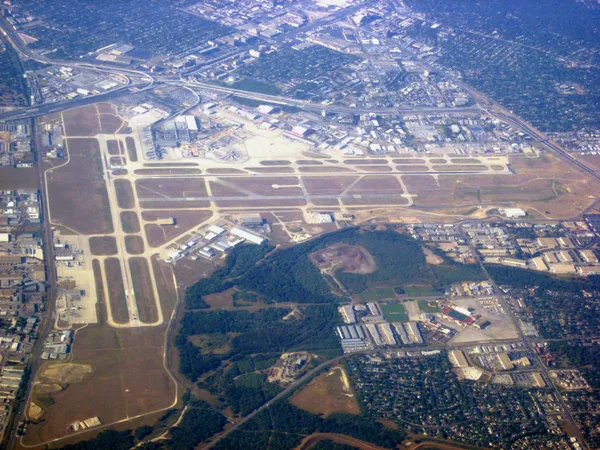
A key local factor has been airfield construction. In early January 2026, the City of San Antonio announced a pavement rehabilitation project on Runway 13R-31L, intended to address targeted repairs and extend the runway’s usable life until a future full reconstruction. The project has required periods when traffic patterns and runway usage shift, which can reduce flexibility for air traffic sequencing and recovery when weather or late-arriving aircraft disrupt schedules.
When an airport’s primary runway has constrained availability, airlines and air traffic controllers have fewer options to reroute aircraft around conflicts, particularly during peak departure and arrival banks. That can translate into gate holds, extended taxi times, and delayed departures that cascade into later flights.
National pressures: spring break demand and federal disruptions
The rise in delays has also occurred amid high-demand travel periods and systemwide constraints. During March 2026, multiple U.S. airports reported unusually long security checkpoint waits tied to a partial federal shutdown affecting Department of Homeland Security operations. While impacts varied by airport and day, the episode underscored how staffing volatility at checkpoints can affect passenger flow, especially during spring break surges.
Separately, the Federal Aviation Administration previously implemented temporary capacity-management measures at dozens of airports in late 2025, reflecting ongoing efforts to balance throughput with safety and staffing realities in the national airspace system. Such measures tend to disproportionately affect large connecting hubs, but they can also ripple to non-hub airports through late-arriving aircraft and disrupted rotations.
How SAT compares to the national picture
Across the United States, on-time performance metrics typically define an “on-time” arrival as one that reaches the gate within 15 minutes of schedule. Nationwide performance has fluctuated year to year, and several analyses of 2025 data place the national on-time rate in the mid-to-high 70% range, with the weakest-performing airports significantly below that level.
While “delays are up” is a meaningful change for San Antonio travelers, the city’s airport has often benefited from less chronic congestion than major coastal gateways and megahubs. That structural advantage can make it easier for schedules to recover after disruptions, even when local construction or peak travel demand adds pressure.
What to watch next
The timeline and operational footprint of runway rehabilitation work, including any periods of reduced runway availability.
Systemwide factors that drive delay propagation into SAT, such as weather and congestion at major Texas and U.S. connecting hubs.
Security checkpoint staffing stability during peak travel periods, when passenger surges can quickly lengthen queues.
Even when an airport’s local conditions are stable, delays can be imported through late-arriving aircraft and disrupted network schedules—making national conditions a key driver of what passengers experience at the gate.
For travelers, the practical implication is that a rising delay environment at SAT does not necessarily mean the airport is among the worst-performing in the country. Instead, it signals that San Antonio is experiencing many of the same pressures affecting air travel nationally—while still operating in a comparatively less congested setting than several larger U.S. airports.