Texas rejects thinly disguised profanity on vanity license plates as 2025 denials near 2,000 statewide
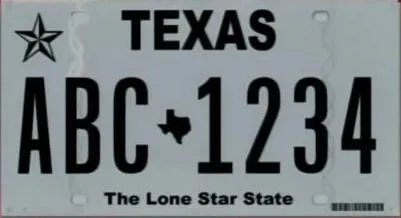
Vanity plates are screened for “objectionable” meanings, including coded language
Texas motorists seeking personalized license plates are running into a firm limitation: the state can deny plate requests not only for explicit profanity, but also for words and acronyms that are indirectly vulgar or easily understood as curse words when spelled phonetically, numerically, in reverse, or in coded form.
During 2025, the Texas Department of Motor Vehicles rejected 1,951 personalized plate requests across the state. The denials span multiple categories that state rules treat as “objectionable,” including indecency, vulgarity or profanity, derogatory messages, references to drugs or criminal activity, implied threats, and phrases that function as negative commands directed at other drivers.
What the rules allow reviewers to consider
Texas administrative rules governing personalized plates give the agency discretion to deny requests that “may be considered objectionable.” The rules explicitly state that reviewers do not have to accept an applicant’s claimed meaning. Instead, they may consider how a plate would reasonably be read by the public, including when the message is disguised through number-letter substitutions, acronyms, mirror-image reading, or symbols that break up a word while preserving its recognizable meaning.
The same framework also addresses content that is sexual in nature, references excretory functions, or uses a pattern commonly associated with sexually suggestive meaning. The number “69” is generally treated as prohibited unless used as part of a full year (such as 1969) or paired with a reference to a vehicle.
Patterns in 2025: acronyms, “leetspeak,” and symbol substitutions
Several recurring formats appeared among rejected requests in 2025. One involves “leetspeak,” where digits substitute for letters to mimic profanity or slurs. Another involves short acronyms that are widely understood as vulgar intensifiers. A third involves inserting approved symbols—such as a heart, star, or the Texas silhouette—between letters to disrupt automated detection while keeping the intended phrase legible.
Separately, Texas rules also prohibit plates that issue hostile or negative instructions to other drivers. Requests framed as taunts or commands aimed at fellow motorists can be denied even when they do not contain profanity.
- Category-based screening covers indecency, vulgarity/profanity, derogatory content, drugs/crime/violence references, and negative driving directives.
- Reviewers may evaluate phonetic and coded meanings, not just literal letter combinations.
- Some symbols are permitted on personalized plates, but they do not shield otherwise objectionable messages.
Texas rules allow denial of a plate if its meaning is objectionable, even when the applicant claims an alternative intent.
How the process affects drivers
The screening framework reflects a broader reality of vanity plates: they function as state-issued identifiers displayed in public, not private speech. That status gives Texas latitude to reject combinations that regulators view as indecent, profane, or otherwise objectionable, including those that rely on thin disguises to convey profanity.
For drivers, the 2025 numbers illustrate how frequently applications fail for content reasons—especially when a phrase relies on widely recognized coded spelling or acronyms rather than straightforward words.