What San Antonio’s police and leaders can legally do as ICE activity rises across the region
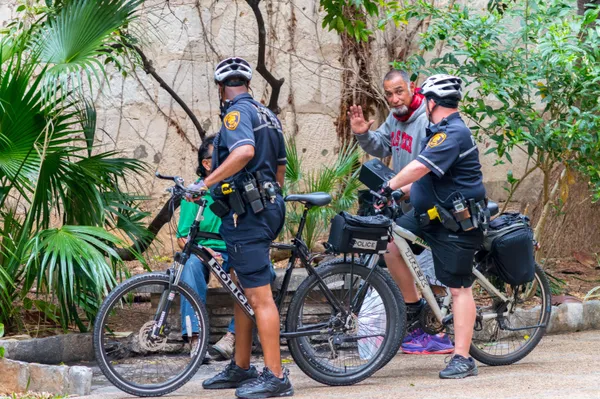
Public concern grows as federal immigration activity becomes more visible in San Antonio
San Antonio officials are facing renewed scrutiny over how local law enforcement interacts with U.S. Immigration and Customs Enforcement, after a series of incidents and enforcement actions heightened public attention in late 2025 and January 2026. Recent operations included a federal action in the city that resulted in roughly 140 arrests, with San Antonio police securing the perimeter while federal agents conducted enforcement activity.
At City Council in recent days, residents urged the city to reduce the local footprint of immigration enforcement. The debate has sharpened around a key question: what cooperation is legally required, what is discretionary, and what oversight mechanisms exist when residents allege civil-rights violations during federal operations.
What San Antonio police do now: limited support roles, not immigration enforcement
The San Antonio Police Department’s core position remains that it does not enforce federal immigration law. In practice, the department can provide support to federal agents when requested, including scene safety and perimeter control during enforcement actions. Separately, ICE can issue detainers—requests to hold an arrested person for transfer to federal custody—typically routed through jail systems rather than street-level policing.
Data cited in recent local reporting shows ICE detainers were issued in 2025 for 111 cases out of more than 51,000 San Antonio Police Department arrests, suggesting detainers were a small fraction of total arrests even as immigration enforcement became a larger public issue.
Bexar County’s jail-based cooperation is expanding under Texas law
A major operational distinction in the region is the county jail system. The Bexar County Sheriff’s Office has entered a 287(g) agreement with ICE under the Warrant Service Officer model. Under that approach, trained and certified deputies can serve ICE administrative warrants inside the jail setting, a structure the sheriff has described as confined to detention operations rather than patrol.
That framework aligns with a statewide policy shift. Texas Senate Bill 8—effective January 1, 2026—requires sheriffs in counties with populations of 100,000 or more to request and, if offered, enter into a written 287(g) agreement (or a similar federal program). The statute’s implementation timeline includes potential enforcement mechanisms beginning December 1, 2026, when the state attorney general may pursue action against sheriffs who do not comply.
Key constraints and decision points for city leaders
Jurisdiction matters: the city police department and the county sheriff operate under different legal duties and settings, especially regarding jail processes.
Models vary: some regional agencies have pursued broader 287(g) “task force” agreements, while Bexar County’s model is jail-limited.
Oversight gaps persist: council members have raised the need for a clearer system to track and investigate civil-rights complaints tied to federal immigration activity, including when local officers provide support roles.
What comes next
In the near term, San Antonio’s policy choices center less on whether the city can stop federal enforcement—because it cannot—and more on how it structures local involvement, how it documents requests for assistance, and how it handles complaints tied to joint operations. At the state level, litigation over Texas Senate Bill 4 continues to shape the broader enforcement climate, but SB 8 is already driving county-level participation in formal ICE agreements through the jail system.
For San Antonio residents, the practical impact often turns on where an encounter occurs: in the community, where local police say they do not conduct immigration enforcement, or in detention settings, where 287(g)-related processes can apply.