San Antonio Couple Stranded in Dubai as Regional Missile Strikes Trigger UAE Airspace Shutdowns
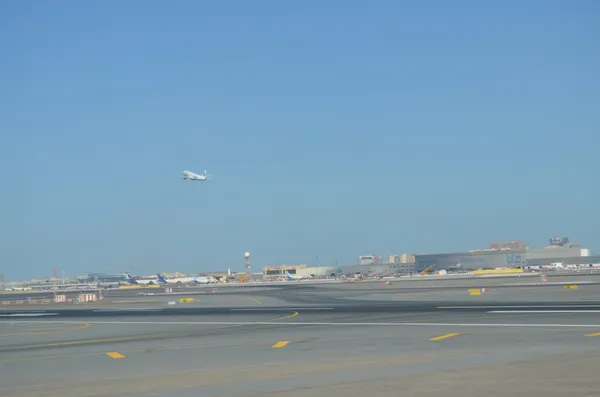
Flights curtailed after attacks reach major Gulf aviation hubs
A San Antonio couple visiting Dubai has been unable to depart as missile and drone attacks in the Gulf region disrupted air travel across the United Arab Emirates, including at Dubai International Airport, one of the world’s busiest transit hubs. The couple, Melissa Cliver and her husband, arrived in Dubai on Feb. 21, 2026, and were scheduled to leave on March 1, but flight cancellations and airspace restrictions left them stranded.
Authorities in the UAE temporarily closed or sharply limited air traffic after weekend strikes affected aviation infrastructure and operations. Dubai International reported minor damage to one concourse and injuries to four airport employees. Separately, Abu Dhabi’s Zayed International Airport reported one death and seven injuries tied to a drone incident, underscoring that the disruption extended beyond a single facility.
Scale of disruption: thousands of cancellations and limited resumptions
The broader disruption has been driven by a rapid escalation between the United States and Israel on one side and Iran on the other, followed by retaliatory strikes and defensive interceptions across the region. As governments closed airspace over key corridors, airlines suspended routes and reworked flight paths, affecting not only travelers bound for the Gulf but also global passengers using Dubai and Abu Dhabi as connecting points between Europe, Africa and Asia.
By March 2, 2026, airlines based in the UAE announced limited outbound operations while most regularly scheduled service remained suspended or heavily reduced. Flight tracking data and airline advisories showed that a large share of scheduled departures from Dubai and Abu Dhabi were still canceled as carriers prioritized moving stranded passengers and assessed risks to aircraft and crews.
What stranded travelers are facing
For travelers caught mid-itinerary, the immediate challenges have been logistical: repeatedly rebooked itineraries, limited seat availability as flights restart in small numbers, and uncertainty tied to rapidly changing airspace restrictions. Some passengers have been moved into hotels after extended waits at airports, while others have had to delay onward travel for work, family events, or connections to long-haul flights.
Airports urged passengers to avoid traveling to terminals without airline confirmation.
Carriers signaled that earlier bookings and disrupted itineraries would be prioritized as seats reappear.
Regional airspace closures have forced rerouting that can reduce capacity and delay resumption of normal schedules.
Government advisories and next steps
U.S. officials issued public guidance in early March urging Americans in multiple Middle East countries, including the UAE, to depart using available commercial options amid heightened security risks and limited transportation.
“Depart now” guidance has been paired with instructions for travelers to monitor airline updates and confirm bookings before attempting airport travel, as flight availability can change within hours.
As of Thursday, March 5, 2026, the outlook for stranded travelers depends on the pace of de-escalation, the reopening of air corridors, and airlines’ ability to reposition aircraft and crews. For the Clivers and others waiting to leave Dubai, the key variable remains whether limited flights expand into stable schedules under tightened security conditions.
Cold front pushing south this weekend may bring widespread rain, thunderstorms, and cooler air across Texas
Woman seriously injured in stabbing near West Side transit corridor as police search for fleeing suspect

Hoops, Heritage, and Humidity: Your San Antonio Morning Briefing